Ukraine helped conquer space once. Now it is going back, this time with Nordic support
Himera and GomSpace have launched a test satellite as part of a network intended to replace Starlink, whilst the Ukrainian Ministry of Defence, ICEYE and Nokia are working on an alternative project
Welcome to the DIM Newsletter, curated by Defense Innovation Highway and Defender Media. It’s a bi-weekly digest of the most significant developments in Ukrainian defence tech, with a focus on what matters to the Nordics.
Our lead story: Ukrainian company Himera and Denmark’s GomSpace have launched OBRIA NANO – a test satellite for a future independent dual-use communications system. In the long term, the companies plan to deploy a satellite network that would cover all of Ukraine and complement European communications systems.
At the same time, Ukraine’s Ministry of Defence is also seeking a Starlink alternative together with Finland’s ICEYE and Nokia. The project is currently at the research stage, ICEYE says. Meanwhile, Ukraine has become a partner of NSPA, opening NATO tenders to Ukrainian defence companies, and has agreed cooperation with the DIANA accelerator.
The business sector also brought several important stories. Fire Point’s Danish subsidiary will receive a €100m loan from Denmark, Sine Engineering is opening an R&D centre in Finland, and Sweden’s Scandinavian X will sell Ukrainian interceptor drones to NATO countries. Finally, Destinus, which supplies Ukraine with Ruta missiles, plans to meet Europe’s need for turbojet engines.
Ukraine and Denmark are working on a system that will make Europe less reliant on Starlink
Amid restrictions and unstable Starlink operation, Europe continues to search for a potential alternative to the American satellite communications system. The Ukrainian company Himera and the Danish firm GomSpace have launched OBRIA NANO into orbit – a test satellite for a future independent dual-use communications system.
The satellite launched into space on 1 October from the Vandenberg spaceport in California as part of the Transporter-18 mission. SpaceX's Falcon 9 launch vehicle placed 130 payloads into orbit, including OBRIA NANO.
On 2 October 2026, the team received the first signals from the satellite, confirming that initial contact had been established, said Himera CEO Misha Rudominski. The next stage of the mission involves checking the onboard systems, configuring the equipment and analysing telemetry.
The satellite was built by Danish company GomSpace, which is also the project's technology partner. The business, currently headed by Carsten Drachmann, was founded in 2007. The company has more than 230 employees and, besides its headquarters in Denmark, has offices in the US, Sweden, Luxembourg and France.
'GomSpace's expertise in small satellites, onboard systems and space mission management will help Ukrainian participants gain practical experience and develop their own competencies', Rudominski comments. His company brings experience in building secure communications solutions.
Moreover, Rudominski had already worked in the space sector. In 2021, he co-founded Promin Aerospace, a startup developing an orbital rocket. Last year, however, he left the company to focus on Himera.
Himera CEO Misha Rudominski (Photo by the company)
Himera has developed a tactical communications system capable of operating under electronic warfare conditions. After raising $2.5m, the company also announced work on Comprehensive Resilient Network – a secure network that allows all devices, sensors, military personnel and drones to exchange data within a single communications system.
In the long term, GomSpace and Himera plan to deploy a satellite network that will provide communications across the whole of Ukraine and complement the capabilities of European satellite networks. At the same time, OBRIA NANO will be controlled by a Ukrainian operator and will serve Ukraine's strategic security needs.
The timeline for deploying a full network is not being disclosed – it will depend on test results, technical decisions, funding and the pace of building further satellites and ground infrastructure. The companies plan to localise the production of satellites and ground terminals in Ukraine and call this an important next stage.
At the first stage, the participants invested their own money. They plan to attract external investment and loans next, but will not use Ukrainian state funds.
The final size of the constellation also remains undisclosed. Andrii Kolesnyk, former adviser to the head of the State Space Agency of Ukraine, believes that around 150 satellites in low Earth orbit would be enough for Ukraine.
Himera does not comment on whether the initiative overlaps with the project being worked on by ICEYE, Nokia and the Ukrainian Ministry of Defence. Finland's ICEYE also declined to comment on this project, noting only that it welcomes every initiative that strengthens Ukraine's sovereign communications capabilities. Read more about the ICEYE and Nokia project below.
This week, Denmark is hosting the first Danish Defense Tech Week, bringing together engineers, defence tech companies, military professionals, investors, researchers and policymakers from Denmark, the Nordic countries, Ukraine and across Europe. Organised by Defense Innovation Highway and the European Defense Tech Hub, the initiative aims to connect Ukraine’s operational experience with Denmark’s defence innovation ecosystem, accelerate practical cooperation and help technologies move from development to operational use and scale.
The programme focuses on electronic warfare, AI and autonomy, next-generation UAS and UAVs, as well as counter-drone systems, critical and underwater infrastructure protection, maritime and Arctic domain awareness, resilient communications and information operations.
Government relations
Ukrainian Ministry of Defence also seeks a Starlink alternative – with help from Finland's ICEYE and Nokia
Ukraine's Ministry of Defence, Finnish company ICEYE and Nokia have also agreed to create an independent satellite communications system for Ukraine. The project is currently at the research stage, ICEYE says.
The parties are exchanging information on needs, capabilities and technological solutions, and holding consultations. A signed letter of intent then provides for testing, training and knowledge exchange. 'Any specific cooperation will be subject to separate agreements or contracts', the Finnish company adds.
An image from the company’s press release
The parties want to build secure broadband communications in low Earth orbit based on European technologies. According to the plan, the system will be usable not only by the military but also by other state services. It is seen as a complement to existing military and commercial communications networks, but launch dates and costs remain undisclosed.
Norwegian government to allocate nearly €100 million for investments in Ukrainian defence industry
The Norwegian government has allocated NOK 1 billion (over $100 million) for investments in Ukraine to be made in partnership with Norwegian businesses. The funds will mobilise further Norwegian private capital for investments in the Ukrainian defence industry.
The funding will come from money already allocated under the Nansen Support Programme for Ukraine. The state-owned investment company Investinor will manage the project, which will target various funds operating in Norway and investing in the Ukrainian defence industry.
The government also believes that the initiative will contribute to the further development of cooperation between Norwegian and Ukrainian defence companies.
NATO tenders become accessible to Ukrainian defence tech companies
Ukraine has become a partner of the NATO Support and Procurement Agency, which will allow Ukrainian defence companies to take part in NATO tenders. They will be able to register in the supplier database, submit bids, participate in tenders on an equal footing with foreign companies and conclude contracts with the agency. The participation mechanism will be in effect for five years.
In addition, Ukraine will take part in the Security Cooperation Support Partnership (SCSP). This will allow it to procure weapons, ammunition and other military equipment through NSPA. Thus, Ukraine has become the first non-NATO member for which a separate partnership has been created as a single point of interaction with NSPA.
Ministry of Defence agrees cooperation with NATO defence innovation accelerator DIANA
Defence Innovation Accelerator for the North Atlantic has agreed to cooperate with Ukraine. The memorandum signed by the parties covers joint projects, information exchange and more.
In particular, the partners want to create a catalogue of Ukrainian defence technologies, collecting data on various solutions, their results and capabilities. This selection will be aligned with the catalogues of NATO countries to identify shared needs and plan joint competitions for startups.
DIANA will also give Ukraine access to NATO's defence expertise and infrastructure. The partnership is intended to strengthen innovation ecosystems and help developments progress from idea to practical application.
Ukraine's Fire Point to receive €100m loan from Denmark
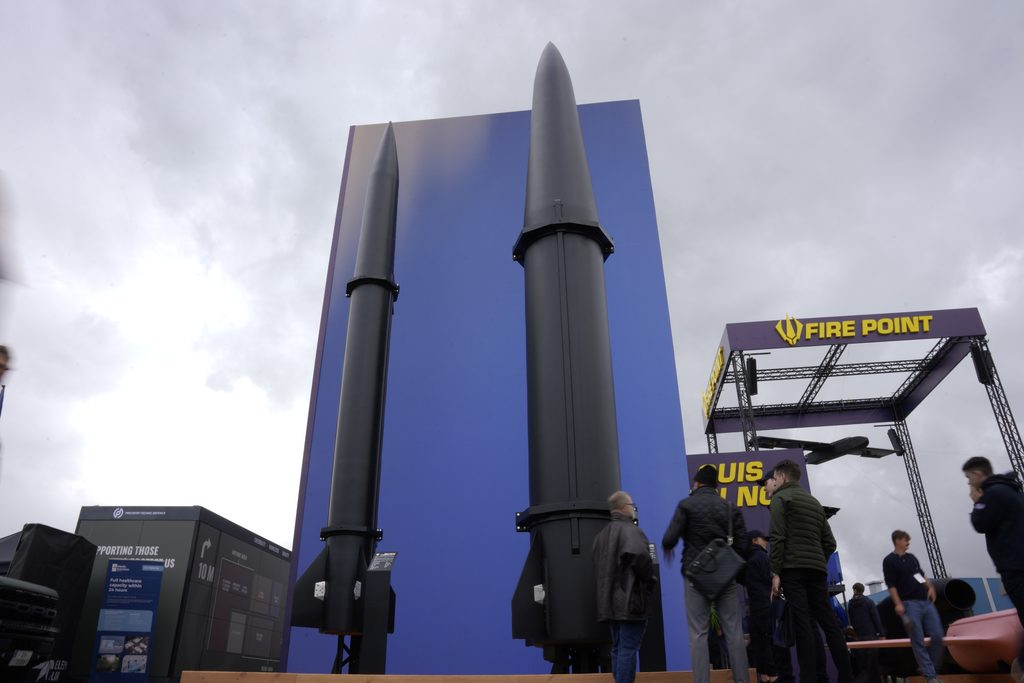
The Danish subsidiary of Fire Point, which produces mid-strike and deep-strike drones, as well as cruise and ballistic missiles, will receive a loan of DKK 750m (€100m) from Denmark. The money will be provided through the Export and Investment Fund of Denmark (EIFO).
The government has provided a state guarantee for this loan, because the war in Ukraine does not allow Fire Point to obtain credit on ordinary market terms. The statement does not disclose where the money will go, but in September 2025 the company announced plans to build a plant in Denmark.
Fire Point ballistic missiles (Photo from company's website)
Solid rocket propellant production will be located in the town of Vojens. The plant was originally due to start operating this year, but its launch has now been postponed to the end of 2027. The project cost has also risen from €50 million to over €150 million. The reason is that the building acquired earlier does not meet the safety requirements, so Fire Point is building a new facility.
Sine Engineering partners with Finland's Insta while opening an R&D centre in the country
Sine Engineering, which develops communications and navigation systems, has announced the opening of an R&D centre in Finland. By the end of this year, the local team will number 100 people.
The centre is being launched on the basis of Sine Engineering's Finnish office, which the company opened in 2025. Under the new project, Ukrainian and Finnish engineers will take part in developing, testing, and producing communications, navigation, and onboard autonomy systems.
Sine Engineering has also signed a memorandum of understanding with Finnish company Insta, which works in defence, software and cybersecurity. However, the company has not disclosed details of this cooperation.
Sweden's Scandinavian X to sell Ukrainian drones to NATO countries
Swedish company Scandinavian X has announced a partnership with one of Ukraine's largest drone manufacturers. Its name is not being disclosed; it is only known that it produces interceptor drones, strike and reconnaissance UAVs, holds several export permits, and has already acted as an international supplier.
The partnership focuses on Ukrainian interceptor drones, which are planned to be produced at Scandinavian X's Swedish plant and used in NATO procurement. The first joint bid is planned for submission in November 2026.
Investment company Front Ventures, one of the founders of Scandinavian X, wants to bring partners from Sweden and other Nordic countries into the cooperation. In the long term, the two companies will consider creating a joint venture that would produce and export Ukrainian products to allied countries.
Destinus, which supplies Ukraine with Ruta missiles, to meet Europe's need for turbojet engines
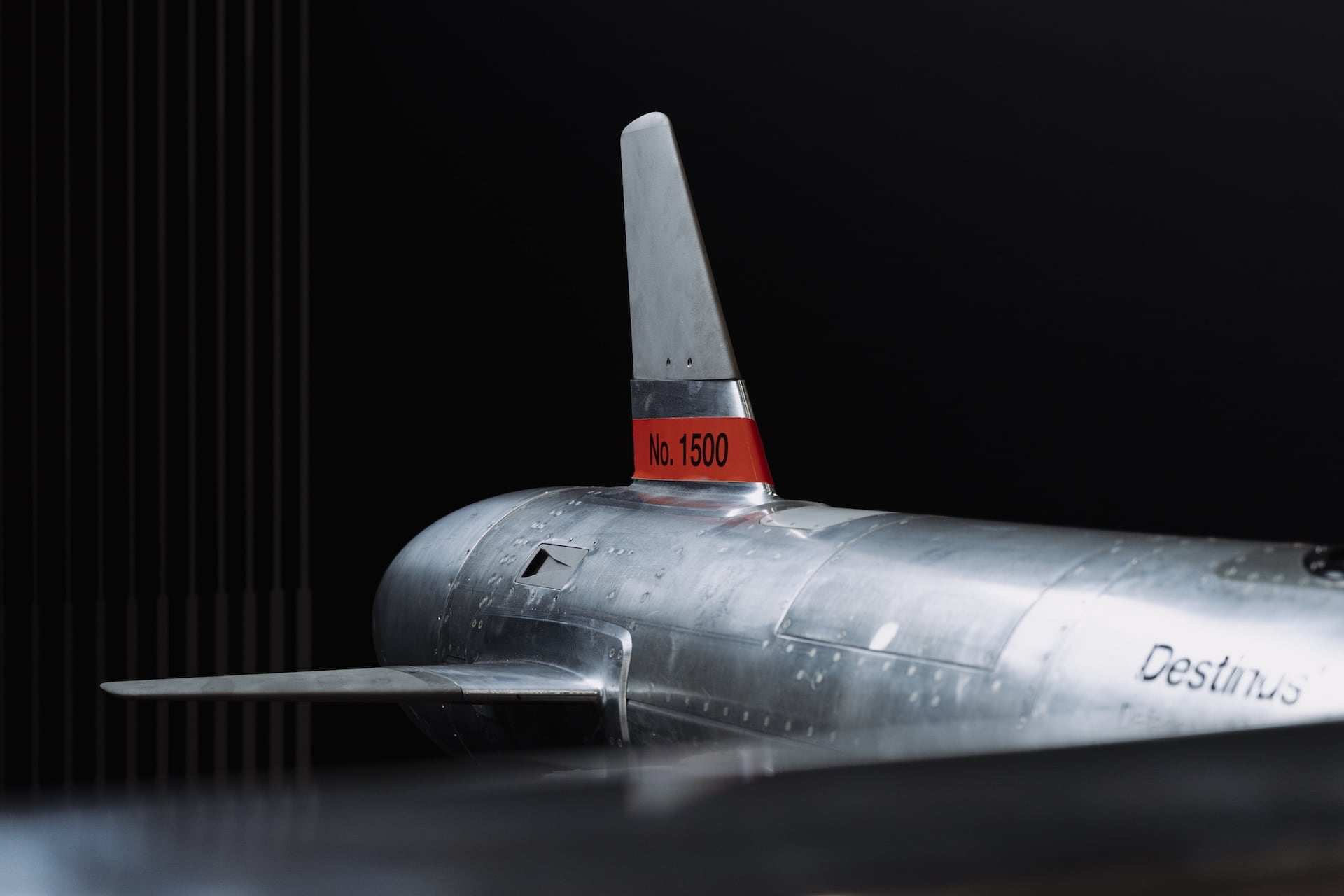
Ruta Block 1 missile, which is used by Ukraine (Photo by Destinus)
From next year, Dutch company Destinus expects to fully meet Europe's and Ukraine's need for turbojet engines for cruise missiles. The company already produces them in series for other manufacturers and for its own projects.
Turbojet engines are used in the Ruta missile, which Destinus has supplied to Ukraine since 2023. The company currently produces almost 300 missiles a month and has also started production of its new version, Ruta Block 2.
At the same time, Destinus uses no Chinese components, says its co-founder Mikhail Kokorich, a Russian entrepreneur who left Russia in the 2010s. His partner is Oleksandr Danyliuk, Ukraine's former finance minister in 2016–2018, who is now Destinus president.