
Farsight Vision is redefining modern reconnaissance. And US and European investors are competing to back it

– 8 min read

In February 2026, Ukrainian-Estonian startup Farsight Vision raised €7.2 million in a seed funding round. The deal ranks among the top five largest investment rounds involving Ukrainian defence startups. Both American and European investors competed for the founders’ backing, seeing strong potential for the company’s technology in both military and civilian applications.
What began as a project focused on object detection in reconnaissance drone imagery is evolving into a company reshaping how modern intelligence and navigation systems work. Today, Farsight Vision combines unmanned technologies, computer vision, and automated spatial data analysis to help plan missions and navigate environments where satellite signals are unavailable or unreliable (GNSS-denied environments).
More than 100 units of Ukraine’s Security and Defence Forces already use the company’s solutions. Farsight Vision has also secured its first international contracts, while the seed round was led by US corporation Axon Enterprise.
Why do investors and the military alike see promise in Farsight Vision? Defence Innovation Media spoke with both groups to find out—and to tell the story of the company and its products.
Farsight Vision was founded in 2023 by two entrepreneurs from Lviv: CEO Viktoriia Yaremchuk and CTO Volodymyr Nepiuk.
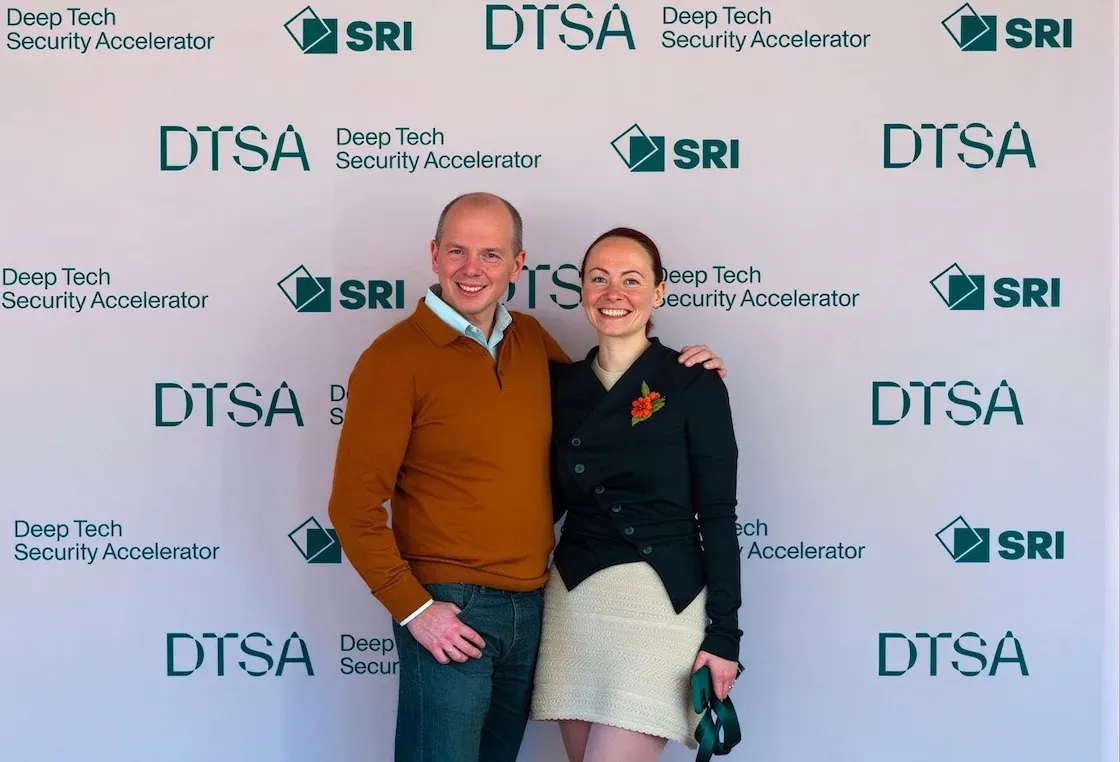
Before Russia’s full-scale invasion, Yaremchuk held leadership roles in several IT projects. Nepiuk previously founded the retail technology startup Datawiz, with a focus on Big Data and computer vision.
Yaremchuk says the roles between the co-founders formed naturally. She represents the company publicly and works with investors and potential clients, while Nepiuk leads technical development and delivery.
We meet in Kyiv while she is traveling from frontline Kharkiv to her home city of Lviv, before heading to Brussels and London for meetings. Yaremchuk rarely stays in one place longer than two days. This winter alone, her work trips have taken her across three continents.
Niels Vejrup Carlsen, founding partner at Final Frontier VC, first met her at an EIFO event in Copenhagen in early 2025.
He recalls being impressed by her energy and determination.
“She is a wonderful and very friendly person. At the same time, she has this clarity of focus and stubbornness that will enable her to climb over, find a hole or break down any wall that stands in her and FV’s way,” he says.
Farsight Vision develops both software and hardware solutions for intelligence gathering and autonomous systems.
Its products allow drone imagery and video to be transformed in real time into detailed 3D terrain models and orthophoto maps.
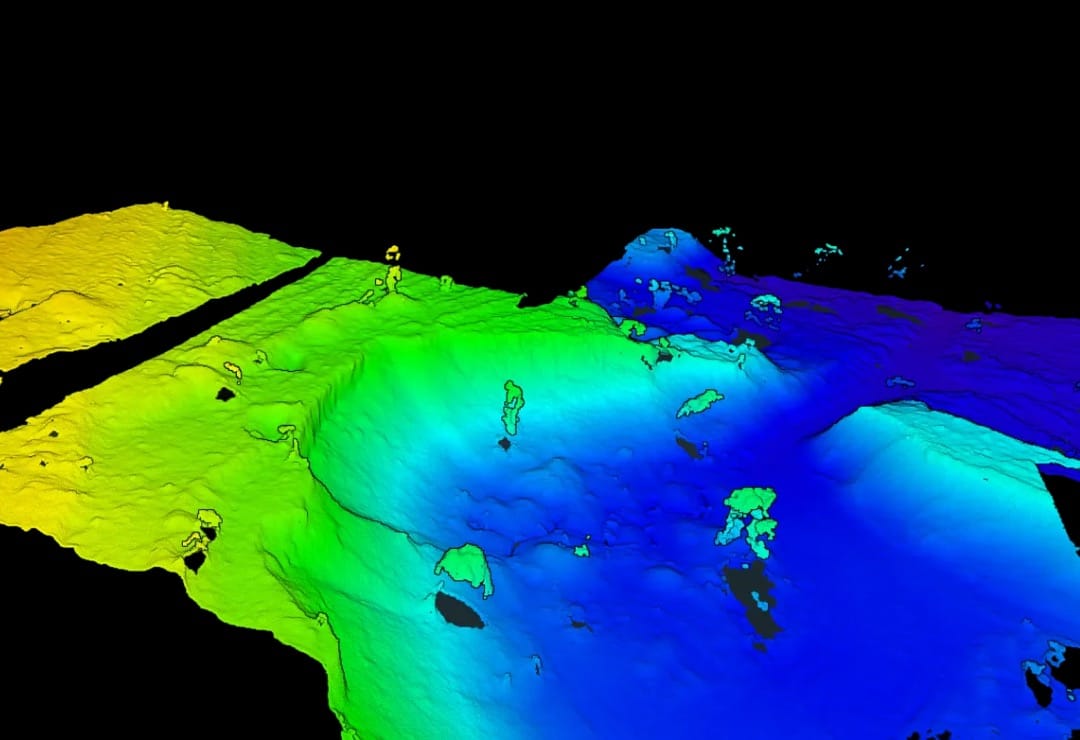
“We work with units of different sizes across various branches of the Defence Forces—essentially anyone who collects aerial data,” Yaremchuk says.
Neural networks trained by the company’s specialists convert this data into tools that help conduct military operations, including:
Some of the users include units of Ukraine’s Unmanned Systems Forces, which rely on Farsight Vision’s ortophotos and 3D maps to plan missions and identify targets.
The head of battalion intelligence in the 413th Regiment of the Unmanned Systems Forces, known by the callsign Jumbo, encountered the company’s products about a year and a half ago at a Brave1 cluster event.
Before joining the military, Jumbo worked as an engineer at Boeing and later as a data analyst at PricewaterhouseCoopers. Since early 2025, he has been implementing Farsight Vision solutions in the regiment’s combat operations.
He says the software is primarily used together with inexpensive reconnaissance drones—known as “photo flights”—to generate orthophoto maps.
“We didn’t have fresh satellite imagery, but we needed an up-to-date map of the terrain,” he says.
According to him, images processed with Farsight Vision’s software integrate well with situational awareness systems and can be used for georeferencing, targeting, and detecting enemy positions.
During a counteroffensive on one sector of the front, the unit also created 3D terrain models using FV solutions and shared them with infantry units preparing for assault operations.
Jumbo now plans to use Farsight Vision tools for planning strike drone missions.
“3D models play a major role here—determining object height, approach paths, optimal aiming points, and so on,” he says.
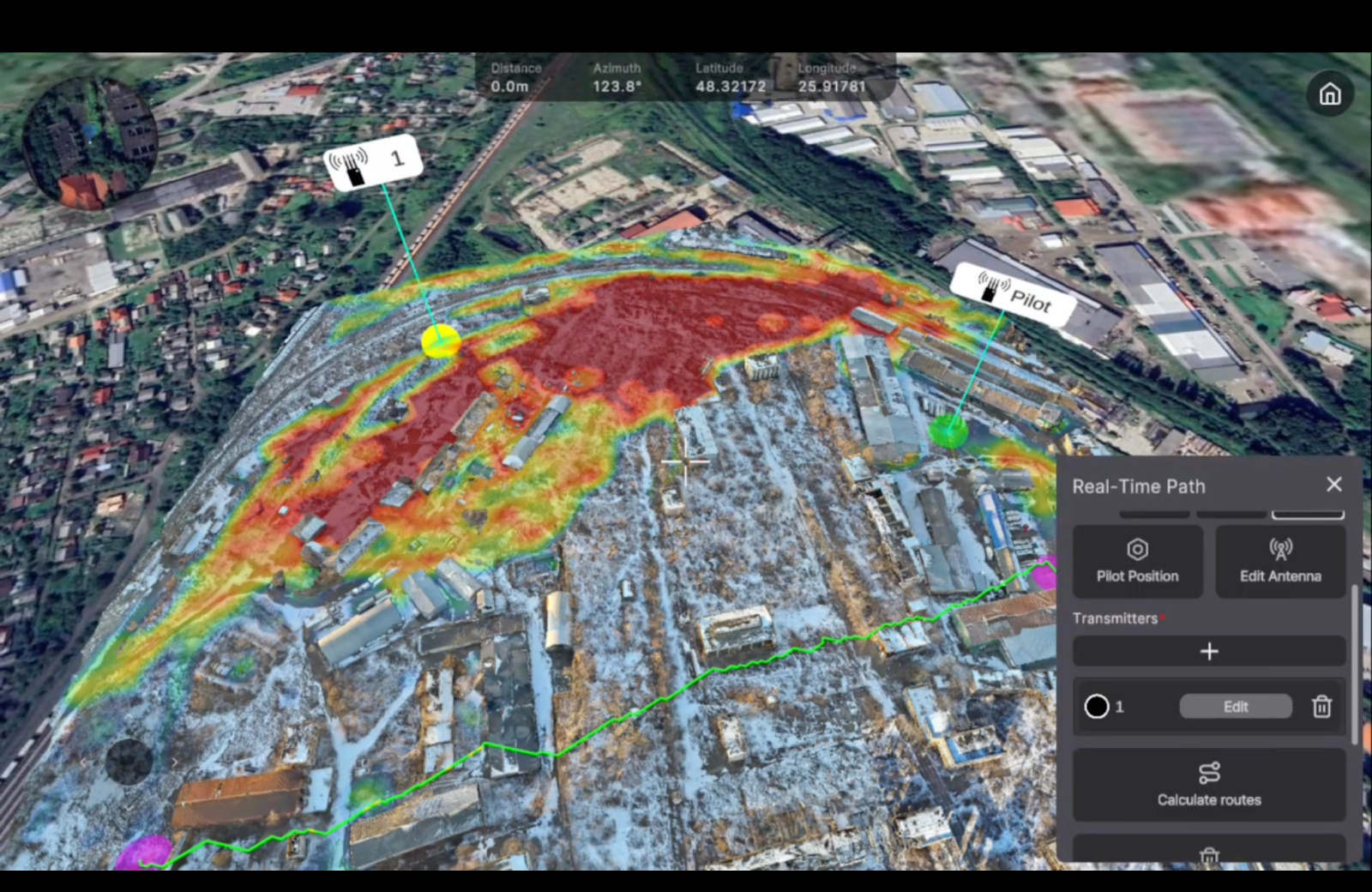
A key advantage of Farsight Vision’s technology is its ability to operate in environments with limited satellite navigation and reconnaissance access, reducing dependence on external political and technical factors.
Investors also see this capability as a major strength.
“Initially it seemed that FV was just one of many companies working on 3D terrain models for planning and GNSS-denied navigation,” says Carlsen.“But when I saw how quickly their solution was being adopted by battalions on the frontline, it became clear that FV’s technology really worked. It was battle-proven—and the best on the market.”
The FV team is now working to integrate its product family into a unified system capable of automating decision-making across the entire lifecycle of combat drone missions.
This includes:
Developing military software in Ukraine remains challenging because the country still lacks a legal framework for centralized government procurement of such solutions.
As a result, Farsight Vision sells its products directly to military units, which fund purchases using their own budgets or support from volunteers and charitable foundations.
The company’s products are currently sold under an annual subscription model.
A standard Farsight Vision license costs €2,400 per year, with a 50% discount for Ukraine’s Security and Defence Forces.
“But even then, not all units can afford it, which creates some inequality in access,” Yaremchuk says.

The company does not disclose the number of licenses sold or its revenue, but more than 100 units of Ukraine’s Security and Defence Forces use its products, mostly at the brigade level.
The company’s business model is primarily based on selling licenses, as well as server deployment and configuration, maintenance, and training services.
“It’s important to note that we do not sell data,” Yaremchuk says. “But we process a huge amount of it—currently more than 200 terabytes per month.”
Farsight Vision solutions are also integrated into drone systems produced by partner companies, including: Athlon Avia, Mara Drone, Besomar, Warbirds, 2021 Solutions, and others.
“Our software works with any reconnaissance drones,” Yaremchuk explains. “But tuning it for specific cameras allows us to achieve better results.”
Military customers can therefore choose between purchasing standalone drones or systems enhanced with FV software that increases reconnaissance effectiveness.
Yaremchuk is actively lobbying for Ukrainian military software to be eligible for centralized state procurement. To push the issue forward, she now leads the defence tech committee of the Techosystem Ukraine industry association.

During a recent meeting with Ukraine’s Minister of Defence Mykhailo Fedorov, Defence Innovation Media asked when military software procurement would be legalized. The minister said the issue is already being addressed and a solution should come soon.
While Ukraine does not yet purchase Farsight Vision solutions centrally, other countries already do.
In autumn 2025, the company signed a long-term contract with the Ministry of Defence of one of NATO countries. It is no longer the company’s only international contract, and the number continues to grow. Yaremchuk is currently negotiating with governments and companies in multiple countries.
Exporting the software is also easier than exporting hardware.
“Software has an advantage because it’s a dual-use product—how it is used depends on the buyer,” Yaremchuk says.
Estonian incorporation also allows the company to sell freely within NATO markets.
Carlsen says this was another key reason Final Frontier decided to invest.
“Any monitoring of activity along a border or around critical infrastructure needs to be GNSS-independent to remain resilient to jamming. We are already seeing customer demand,” he says.
Estonian co-investors share this view.
“Farsight Vision is an example of a company where technology born from real operational needs becomes an international dual-use solution,” says SmartCap CEO Sille Pettai.“It covers the entire lifecycle of autonomous systems—from threat detection to neutralization. For Estonia, this means new technological capabilities and talent in defence tech, as well as stronger links between our defence and technology ecosystems.”
Farsight Vision first attracted significant investment in autumn 2024, when Estonian venture fund Darkstar invested €600,000.
The fund continued to back the company in the €7.2 million seed round announced in February 2026.
The seed round was led by Axon Enterprise and the Estonian state-backed SmartCap Defence Fund. Other investors included Poland’s Radix Ventures, Switzerland’s Anker Capital, and Denmark’s Final Frontier VC.
Carlsen believes the company could become a major player in the defence tech market.

“FV has the potential to provide the foundational data layer for situational awareness,” he says.
The company is now working to integrate its product ecosystem and fill remaining technological gaps. This will require significant investment in both the team and R&D.
According to Yaremchuk, the startup plans to recruit highly specialized experts from around the world.
Beyond talent, Farsight Vision also plans to invest heavily in developing its own hardware—something the company previously approached only selectively.
The team is already testing several proprietary modules. Additional funding will support collaboration with communications system manufacturers, hardware developers, and military units.
For international expansion, Farsight Vision is focusing primarily on the Baltic states, Scandinavia, and the United Kingdom.
In early 2026, Farsight Vision and the Estonian company CrystalSpace received a $1.5 million grant from the Applied Research Programme (RUP) to jointly develop navigation technologies that do not rely on GPS.
The company also plans to announce partnerships with European drone manufacturers and conduct trials with the armed forces of several countries.
And with a $35-billion corporation that dominates the US public safety market as its lead investor, Farsight Vision is now opening the door to the American market.
As it grows into a global defence technology company, Farsight Vision says it remains focused on its core mission.
Jumbo from the 413th Regiment speaks warmly about working with the startup.
“They have excellent support. They respond quickly to problems and feedback,” he says.“Their focus on frontline units is top-tier. They’re not detached from reality and they never lose touch with the front.”
Published in partnership with Defender Media.